Publications
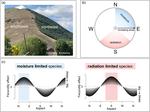
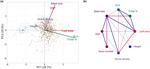
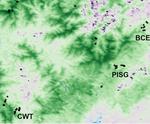
Using nearly 2.9 million tree-years from 292 species, this paper shows that slope, aspect, and drainage shape tree fecundity and interact with climate, suggesting that topographically diverse landscapes can offer local refuges for reproduction under climate change.
Lauren Jenkins,
Taylar Bankston,
Miao Hu,
Ines Ibanez,
Roland Kays,
Georges Kunstler,
Jordan Luongo,
Sierra McMurry,
Kira Meyer,
Emily V. Moran,
Miranda D. Redmond,
Chantal D. Reid,
Tong Qiu,
Shiqi Zheng,
James S. Clark
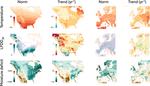
Across 292 tree species in North America and Europe, this paper shows that changes in seed production are driven by moisture deficits and late freeze rather than rising annual temperature, so tree fecundity is not yet shifting poleward despite rapid warming.
James S. Clark,
Taylar Bankston,
Michal Bogdziewicz,
Maxime Cailleret,
J. Julio Camarero,
Sylvain Delzon,
Bruno Fady,
Andrew Hacket-Pain,
Mick E. Hanley,
Miao Hu,
Ines Ibanez,
Lauren Jenkins,
Valentin Journe,
Roland Kays,
Georges Kunstler,
Jordan Luongo,
Anders Marell,
Sierra McMurry,
Kira Meyer,
Emily Moran,
Thomas A. Nagel,
Tong Qiu,
Elena Quintero,
Miranda D. Redmond,
Chantal D. Reid,
Francisco Rodriguez-Sanchez,
Marie-Claude Bel-Venner,
Samuel Venner,
Miguel A. Zavala,
Shiqi Zheng,
Magdalena Zywiec
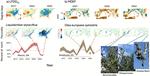
This paper reveals the impact of late freeze impacts on tree fecundity across North America and Europe. This is also the first time we are able to make continental-scale predictions through the MASTIF network
James S. Clark,
Robert Andrus,
Margarita Arianoutsou,
Davide Ascoli,
Yves Bergeron,
Michal Bogdziewicz,
Thomas Boivin,
Raul Bonal,
Thomas Caignard,
Maxime Cailleret,
Rafael Calama,
J. Julio Camarero,
Francesco Chianucci,
Emil Cienciala,
Benoit Courbaud,
Sylvain Delzon,
Michael C. Dietze,
Josep-Maria Espelta,
Bruno Fady,
Nikolaos M. Fyllas,
Gregory S. Gilbert,
Georg Gratzer,
Arthur Guignabert,
Andrew Hacket-Pain,
Arndt Hampe,
Mick E. Hanley,
Janneke HilleRisLambers,
Jan Holik,
Kazuhiko Hoshizaki,
Miao Hu,
Ines Ibanez,
Fatih Isik,
Lauren Jenkins,
Jill F. Johnstone,
Valentin Journe,
Alper K. Kadioglu,
Irem S. Kizilaslan,
Johannes M. H. Knops,
Richard K. Kobe,
Nesibe Kose,
Eylul U. Kulah,
Georges Kunstler,
Jalene M. LaMontagne,
Mateusz Ledwon,
Aleksi Lehtonen,
Veronica Loewe-Munoz,
James A. Lutz,
Anders Marell,
Kira Meyer,
Emily Moran,
Renzo Motta,
Jonathan A. Myers,
Thomas A. Nagel,
Ignacio M. Perez-Ramos,
Lukasz Piechnik,
Tomasz Podgorski,
Renata Poulton-Kamakura,
Tong Qiu,
Miranda D. Redmond,
Chantal D. Reid,
Kyle C. Rodman,
Francisco Rodriguez-Sanchez,
Pavel Samonil,
Vladimir Seben,
Barbara Seget,
Shubhi Sharma,
Jaroslaw Socha,
Michael A. Steele,
Jacob N. Straub,
Samantha Sutton,
Peter A. Thomas,
Giorgio Vacchiano,
Marie-Claude Venner,
Samuel Venner,
Miguel A. Zavala,
Shiqi Zheng,
Magdalena Zywiec
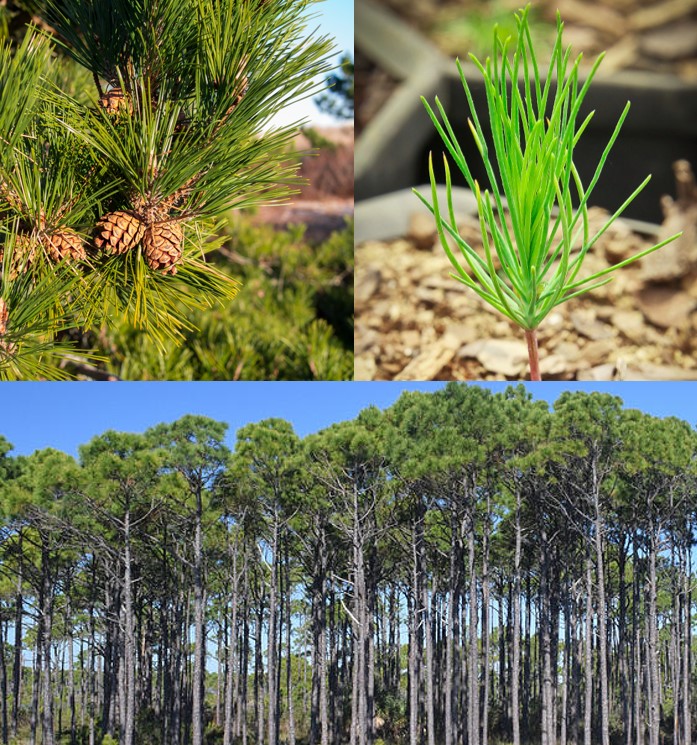
The fundamental trade-off between current and future reproduction has long been considered to result in a tendency for species that can …
Valentin Journe,
Michal Bogdziewicz,
Benoit Courbaud,
Georges Kunstler,
Tong Qiu,
other 95 contributors,
James S. Clark
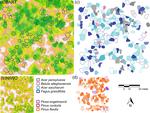
This paper reveals the effects of remotely sensed nutrient supply on forest reproduction across the United States. Consistent with our previous findings, we found increasing phosphorous is assocaited with low seed production at both species and landscape level.
Tong Qiu,
James S. Clark,
Kyle R. Kovach,
Philip A. Townsend,
Jennifer J. Swenson
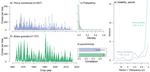
This paper quantifies three components of masting (volatility, periodicity, and synchronicity) from 12 million tree-years worldwide and shows that species dependent on mutualist dispersers avoid masting, an effect that explains more variation than climate, soil fertility, or nutrient demand.
Tong Qiu,
Benoit Courbaud,
Valentin Journe,
Georges Kunstler,
other 95 contributors,
James S. Clark
This paper compared the volatility metrics introduced by Qiu et al., (2023) Nature Plants and compared it with traditional metrics that measures masting
M. Bogdziewicz,
Rafael Calama,
Benoit Courbaud,
Josep M. Espelta,
Andrew Hacket-Pain,
Valentin Journe,
Georges Kunstler,
Michael Steele,
Tong Qiu,
Magdalena Zywiec,
James S. Clark
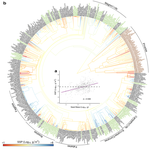
This paper confirmed the seed number-size trade-off across the trait spectrum based on the Species Seed Production (SSP) developed in Qiu et al. (2022), Nature Communications
M. Bogdziewicz,
Benoit Courbaud,
Valentin Journe,
Georges Kunstler,
Tong Qiu,
other 98 contributors,
James S. Clark
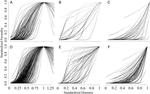
This paper aims to understand the size-numbers trade-off in species seed production and how species traits have mediate the trade-off. The paper also reveals the effects of soil fertility on both individual and community fecundity at a global scale.
Tong Qiu,
Benoit Courbaud,
Valentin Journe,
Georges Kunstler,
other 95 contributors,
James S. Clark
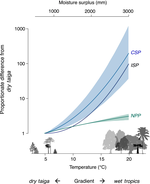
The orders of magnitude of differences in seed production from dry tundra to tropical rainforest beyond which can be explained by the Net Primary Production (NPP).
Valentin Journe,
Benoit Courbaud,
Georges Kunstler,
Tong Qiu,
other 95 contributors,
James S. Clark
A global analysis finds that fecundity decline in large trees is pervasive, consistent with physiological decline, thus providing new evidence for tree senescence. For the 20% of species not showing fecundity declines, this lack of evidence was linked not to specific species groups, but rather to lack of large trees in the data.
Tong Qiu,
Benoit Courbaud,
Valentin Journe,
Georges Kunstler,
other 61 contributors,
James S. Clark
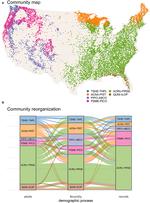
This paper quantified the community reorganizations from adults to fecundity to seedling recruitment.
Tong Qiu,
Shubhi Sharma,
Christopher Woodall,
James S. Clark
Events
Tong will talk about phenology impacts on tree fecundity
Dec 15, 2025 12:47 PM — 12:58 PM
New Orleans, LA
Tong Qiu,
Yu Shen,
Hanshi Chen,
James S. Clark
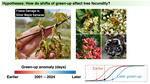
The timing of spring green-up affects tree reproduction in the temperate and boreal forests.
Aug 6, 2023 10:00 AM — Aug 11, 2023 6:00 PM
Portland, Oregon
Tong Qiu,
James S. Clark